Three axes
Succeeding in life!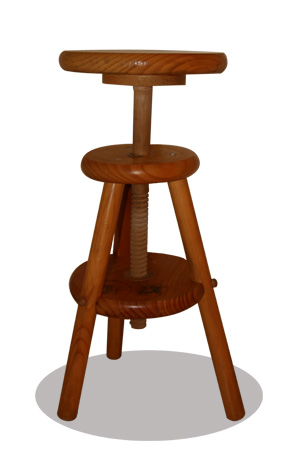
Many people ask themselves this question: how can I succeed in life?
It is also the question many teenagers may ask themselves, standing at the door of their “working” life, faced with the painful and difficult need to make choices about their studies and their future life...
Some found their “vocation” very young: “I'll be a lawyer”, “I love animals and I want to be a vet!”. Those are well-marked roads...
Yet not everyone has this kind of certainty, and the possibilities our world offers are so vast and so complex that it is very hard to set off with strength and conviction in one direction while forgetting everything else, so doubt and paralysis often set in.
Of course, nobody should be able to answer for us about the direction we want to give our life. If we do not know it ourselves, how could anyone else?
So let us look at it from another angle and try to see, in a more or less near future, what we would like to have in our life...
As I like to find my answers in the objects and experiences of my life, I look at a three-legged stool in my office...
What a beautiful, simple object!
Three legs is the minimum number for things to stand up without effort, well balanced!
It does not work well with one leg, nor with 2 legs.
Three legs, three points of support, are called a “plane support” in kinematics and give great stability.
So let us try to see what we could call these legs!
The first would be: social life.
It is the social label we have to take on, through our work, our responsibilities, our commitments.
It is the role we are asked to play, or that we accept, in our life and in our relationship with society.
School and qualifications prepare the role you will have to play.
By going far in your studies you will have the chance of a fulfilling social life
Social life brings together work and the social relationships we have with the world around us. It is important, and we must make efforts to have a social life that fills the time we spend at work properly. It must also meet our needs, and so bring us money, but also self-esteem, long before we expect recognition from anyone or anything...
We spend a lot of time at work, and doing something enjoyable will have a positive effect on us and those around us.
But to do something enjoyable we (often) have to prepare for it for many years. This learning phase is necessary, because to know an activity you must spend time in it, find your bearings and gain experience, often question yourself, and above all learn to keep your feelings in check and accept your mistakes.
If we live as a couple, with children, we must understand that the people close to us should not have to bear our ideas too much, and that it is right to do our best to give them a decent life.
The second leg would be: emotional life.
We relate to the world through our emotions.
So everything is deeply emotional, sometimes even our relationship with our “important” objects, and many will recognise themselves in giving their car a pet name, which, besides making it seem human, shows how much we love it...
Emotional life is very important. It is built in the same way that we go to school to learn a trade and do enjoyable things.
It is certainly the most “complicated” life to build, because we think, and above all would like, to have no constraints, no master, teacher or boss to respect, but instead simply to satisfy our desires and our emotional, sensual and sexual hunger.
So in this area young people meet and try to form a couple, but difficulties appear, and nothing has taught us how to learn within this relationship, which swings from one extreme to the other, from the intense pleasure that fulfils us to the total depression of heartbreaking pain.
So everyone suffers, and luminous, peaceful couples who take difficulties and pleasures with the same restraint and the same light are rare, in the luminous spirit of Brother Antoine: Thank you for everything!
Each person in a couple must understand that the other is fallible, weak and full of desires different from mine, and that we must try to understand the other, respect them and above all love them in their entirety, with empathy and kindness.
This is not easy, because we are so convinced we are “masters of the world”, always right, misunderstood or unloved by others. We often live this emotional relationship with the world and with people (near or far) in a “take it or reject it” mode, rarely with kindness and empathy.
The hardest thing on this axis is to see that in the end malice does not really exist in this world (apart from a few dreadful exceptions, such as killers or rapists) and that everything comes from simple misunderstandings between people, clumsy gestures, because in the end most people very often also try to love and do their best, while making mistakes in their turn...
Knowing how to question yourself, and telling yourself that if you are not accepted it is not the world that must change but you, will be a good starting point for your life!
And yet, by trying not to remain a big egoist convinced of always being right and that our desires are perfectly legitimate, we can live with someone for years and build, day after day, something beautiful and strong...
The third leg would be: “philosophical” life
Many possibilities come in here, but in the end, if each of us looks at our life, we will find something very precise: it is what we do to give ourselves pleasure, to recharge, to raise ourselves up.
Some ride motorbikes, do Yoga or painting, love reading or the cinema, go cycling or walking, collect stamps, or practise a religion with fervour...
In short, it is each person's playful relationship with the world.
This leg is very important; it often brings light to the person who lives it. We also call it passion!
It is also the spiritual quest, that pursuit which will remain present until our last breath, and perhaps even beyond...
It seems to me that this leg is the pillar of an individual, their central and real strength in the face of life and of difficulties. When it is missing, the person is tossed about by life with every wind and storm; they remain nothing but life's plaything, instead of playing with it...
Three legs
So let us come back to this stool...
It tells us a lot of important things...
For example, it shows us that the legs must be the same length...
Ha!!!
How many of us have one leg a little too long on the social side because of the time we spend at work...
How many of us find our family in our work and forget our emotional life?
How many of us have forgotten the emotional relationship and replaced it with ever more beautiful presents?
But a leg that is too long does not allow good balance, and the whole system falls.
And often, when a job disappears, we see couples tear apart... One leg that falls often brings down another, and it is very often the “philosophical” level that catches the stool before it hits the ground.
Let us also see that for it to stand straight, it needs space between the legs...
Ha!!!
What would this space be?
Khalil Gibran says that the two pillars of an arch must stand apart, and that there must be space, secrets, between them...
The space between the pillars is the risk-taking in our lives. Without it we are cramped, puny, or full of security and guarantees, but we do not live...
But the search for security and guarantees runs counter to consciousness. It turns us into robots empty of life and spirit, and takes away all meaning from our work and our passions...
It lulls us softly in our daily routine, which becomes a dreadful lullaby that, for many, will stop only as death approaches. But then it will be too late for a pragmatic and positive approach to discovering life; all that will remain is an icy shiver, a fear of the unknown and a feeling of having let one's life go by for very little...
This space between the legs would also be our general culture.
Culture is so important: it allows me to understand others, to talk with them instead of rejecting them, to stay one step ahead of their rejections so as to protect them from themselves, and so remain in peace and harmony.
For in the end the greatest of human poverties is indeed ignorance and intellectual poverty, or blindness and fanaticism. How sad to hear people using only two-syllable words in most songs today! How sad to see people barking instead of speaking simply and calmly!
Intelligence is indeed synonymous with space and light in the head!
Finally, we can see in the height of the stool the idea of spiritual elevation, which is also fundamental for living a beautiful life and being able one day to say to ourselves: "I don't want to change anything, my life is perfect".
In conclusion, succeeding in life is indeed an alchemy that must take into account the 3 axes we have seen above.
This requires us to see and understand the rules clearly and to reposition all the events of our life on these different levels, because we will have to build ourselves on all of them...
Denis
Comments (2)
Angekouassi
LA VIE EST UNE GRACE
Odile
"Trois pieds c'est le chiffre minimum pour que les choses tiennent debout sans effort, bien équilibrées ! Cela ne marche pas bien avec un seul pied, ni avec 2 pieds".
Une personne qui choisit de vivre une vie spirituelle intense (moine, ermite, solitaire...) aura sans doute un tabouret à 2 pieds (vie sociale, vie spirituelle) et celui-ci peut très bien tenir si les 2 pieds sont bien placés ?
Reply from Denis
Oui, le déséquilibre pourrait ainsi créer l'attention à chaque instant et donner l'impulsion pour un dynamisme et une intention forte...